What Are NCS and EMG?
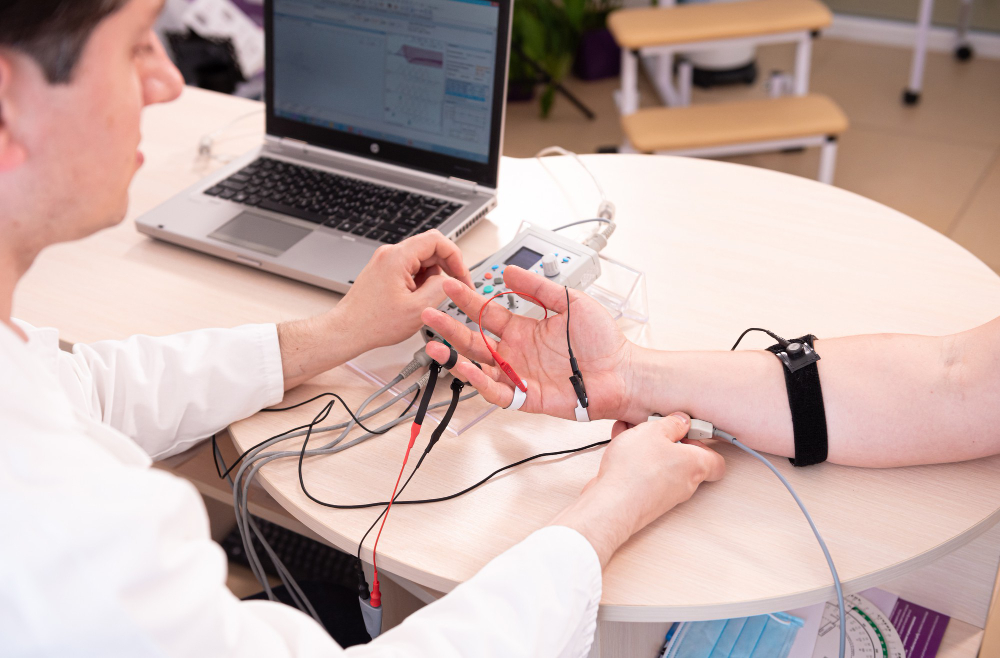
NCS stands for Nerve Conduction Study. EMG means Electromyography. Both tests help doctors find hidden nerve problems. NCS checks how well your nerves send signals. EMG looks at how your muscles react to these signals. Together, they give a clear picture of nerve and muscle health. Many people need these tests to diagnose nerve disorders. For example, they help find the cause of numbness, tingling, or weakness.
Why Are NCS and EMG Performed?
Doctors use NCS and EMG to diagnose nerve and muscle issues. Sometimes, symptoms like pain or weakness do not show up on regular scans. In these cases, NCS and EMG can reveal what’s hidden. For instance, they help find problems such as:
Additionally, these tests can track how nerve problems change over time. This helps doctors plan the best treatment for you.
How Do NCS and EMG Work?
Both tests are simple and safe. Here is a step-by-step look at how NCS and EMG work:
Because these tests look at both nerves and muscles, they give a full picture of your nerve health.
What to Expect During the Tests
Many people feel nervous before these tests. However, knowing what to expect can help. Usually, the whole process takes 30 to 90 minutes. Here’s what happens:
Although the tests may feel odd, most people find them easy to handle.
Benefits and Limitations
Clearly, NCS and EMG offer many benefits. For example, they:
However, there are some limits. Sometimes, mild nerve problems may not show up. Also, these tests do not find every type of nerve or muscle issue. Even so, they are among the best tools for diagnosing nerve disorders.
Safety and Risks
Both NCS and EMG are very safe. Most people have no problems. Still, a few may feel mild discomfort. For instance, you might notice:
Usually, these effects go away quickly. If you have bleeding problems or take blood thinners, tell your doctor before the test. According to the CDC and other health experts, serious risks are rare.
When Should You Consider These Tests?
Sometimes, nerve problems are hard to spot. You should consider NCS and EMG if you have:
If these symptoms last more than a few days, talk to your doctor. Early testing can help find the cause and start treatment sooner.
Frequently Asked Questions (FAQ)
Conclusion
NCS and EMG are safe and effective tests used to diagnose hidden nerve and muscle problems. They help doctors identify the cause of symptoms like numbness, tingling, or weakness.
If you experience such symptoms, consult a neurologist at Dr. Pampaniya’s Neuro Hospital for personalised guidance and expert care.