
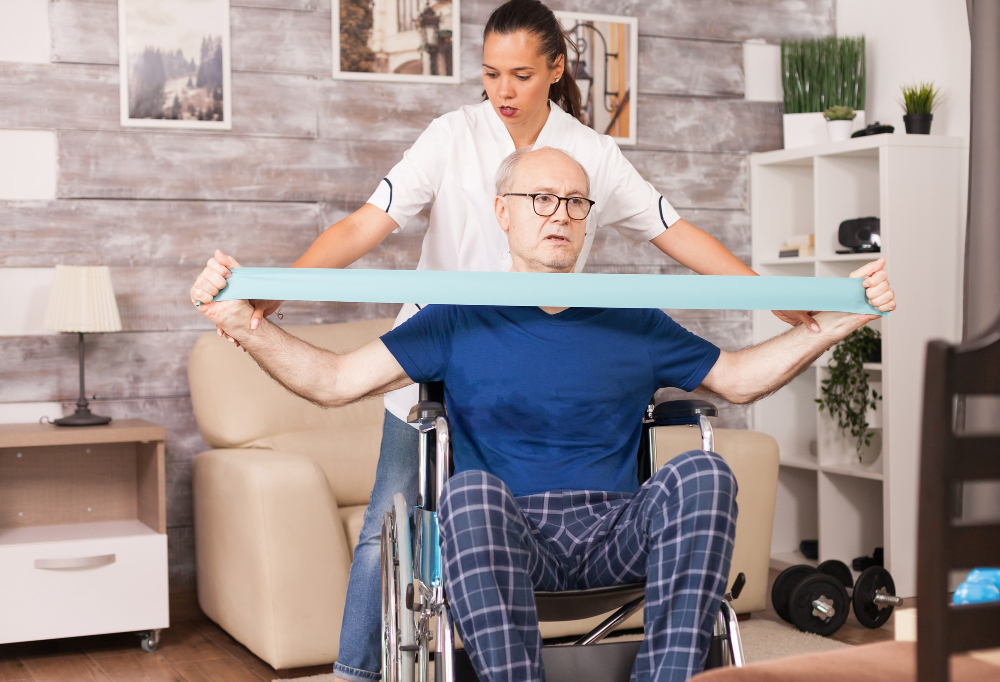
Physiotherapy for Stroke: 5 Things You Can Start Today at Home

Introduction

Physiotherapy for stroke at home can help you regain strength and movement. After a stroke, many people face weakness or trouble moving. Starting simple exercises at home can speed up recovery. In fact, home physiotherapy helps you stay active, improve balance, and boost confidence. With the right steps, you can make steady progress every day.

What Is Stroke and Why Is Physiotherapy Important?

A stroke happens when blood flow to part of the brain stops. This can cause weakness, numbness, or trouble speaking. Because of this, daily tasks may become hard. Physiotherapy is important because it helps your body relearn movements. It also prevents stiffness and keeps your muscles strong. According to the World Health Organization (WHO), early movement after stroke can improve recovery. Therefore, starting exercises at home is a key part of getting better.

Safety Tips Before Starting Home Physiotherapy

Before you begin any stroke recovery exercises at home, safety comes first. Here are some tips to help you stay safe:

  • Always talk to your doctor or physiotherapist before starting new exercises.
  • Wear comfortable clothes and shoes that do not slip.
  • Keep a sturdy chair or table nearby for support.
  • Exercise in a clutter-free area to avoid falls.
  • Stop right away if you feel pain, dizziness, or shortness of breath.
  • With these tips, you can lower your risk of injury while doing home physiotherapy for stroke patients.

    5 Physiotherapy Exercises You Can Start Today at Home

    Here are five safe exercises after stroke you can try at home. Each one is simple and can help with stroke recovery.

    Seated Marching

  • How to do it:
  • Sit upright in a sturdy chair.
  • Hold the sides of the chair for support.
  • Lift one knee up as high as you can, then lower it.
  • Repeat with the other leg.
  • Do 10 lifts on each side.
  • Benefits: This exercise improves leg strength and balance. It also helps with walking.
  • Safety: Move slowly and use the chair for support. Stop if you feel tired.
  • Shoulder Rolls

  • How to do it:
  • Sit or stand with your back straight.
  • Lift your shoulders up toward your ears.
  • Roll them back and down in a circle.
  • Repeat 10 times.
  • Benefits: This exercise loosens stiff shoulders and improves posture.
  • Safety: Do not force the movement. Stop if you feel pain.
  • Hand Squeezes

  • How to do it:
  • Hold a soft ball or rolled towel in your hand.
  • Squeeze it gently, then relax.
  • Repeat 10 times with each hand.
  • Benefits: Hand squeezes help improve grip strength and hand control.
  • Safety: Do not squeeze too hard. Rest if your hand feels tired.
  • Ankle Circles

  • How to do it:
  • Sit with your feet flat on the floor.
  • Lift one foot and slowly move your ankle in a circle.
  • Do 10 circles in each direction.
  • Switch to the other foot.
  • Benefits: Ankle circles help prevent stiffness and improve blood flow.
  • Safety: Move gently and avoid quick movements.
  • Wall Push-Ups

  • How to do it:
  • Stand facing a wall, about an arm’s length away.
  • Place your hands flat on the wall at shoulder height.
  • Bend your elbows to lean toward the wall, then push back.
  • Repeat 10 times.
  • Benefits: Wall push-ups build arm and chest strength.
  • Safety: Keep your feet flat and do not lock your elbows.
  • When to Seek Professional Help

    Even though home physiotherapy for stroke patients is helpful, sometimes you need expert care. You should contact a physiotherapist or doctor if you:

  • Notice new weakness or numbness
  • Feel pain that does not go away
  • Have trouble breathing during exercise
  • Cannot do daily tasks as before
  • Feel unsure about how to do the exercises
  • In many cities, you can find stroke physiotherapy in your area for extra support.

    Additional Lifestyle Tips for Stroke Recovery

    Besides exercises, healthy habits can help your recovery. Here are some tips:

  • Eat a balanced diet with fruits, vegetables, and lean protein.
  • Drink enough water every day.
  • Get enough sleep each night.
  • Take your medicines as prescribed.
  • Stay connected with friends and family for support.
  • Try to keep a positive outlook, even on tough days.
  • According to the Centers for Disease Control and Prevention (CDC), these steps can help lower the risk of another stroke.

    Conclusion

    To sum up, home-based physiotherapy for stroke recovery can greatly improve strength, mobility, and independence. Starting with simple, safe exercises and maintaining healthy habits makes a big difference.

    For best results, consult a physiotherapist or neurologist at Dr. Pampaniya’s Neuro Hospital for personalised guidance before beginning any new exercise routine.